Can Brain Evolution Teach Us Anything About Conflict?

The Russia-Ukraine war playing out on television these last two weeks has produced a helpless feeling of not being able to help. Yet, it has motivated me to explore alternative ways to be of use. This essay represents a small way of using what I know to consider future answers to such conflicts.

The 21st century is well on its way to becoming the era of translational biological information. This means we are applying the vast amount of knowledge gathered over the last century to change the world for the better. Our modern economy, law, politics, and the military reflect this process. These are several of the many institutions in society that owe a great deal to the growing understanding of the mind. Advertising, marketing, focus groups, negotiations, ethics, law, and intelligence work—all rely on awareness of how we think and decide. From genetics to personalized medicine, the study of the human mind sits at the edge of a truly transformational time. We know well the link between malnutrition and depression, while we learn more every day about the role depression plays in mild cognitive impairment. Other findings, such as the effects that microbiome bacteria in our stomachs have on cognition, are nothing short of extraordinary.

For the past century and a half, we have learned that changes in our brain result in modifications to the mind and to our personality. Tools to study and learn these brain-mind relationships, such as deep brain stimulation, have moved us from indirect to more direct mapping. We have discovered ways to know how people decide and think, and how it is we communicate with each other. A more recent development in neuroplasticity is that modifications to our personality can cause changes to our brains. Mindfulness meditation to manage stress rewires unhealthy circuits in the brain, such as the HPA axis response.

What such insights have produced is not only a better grasp of how information processing affects perception and cognition but how, through extensive training, we can extend our personal and sociocultural boundaries. Neurotechnology, one of the new sciences in this contemporary world, has developed methods for treating and repairing soldiers injured in battle. It has figured out how we move cursors across a screen through the power of thought and how to control an advanced prosthetic arm in the same way. Neurotechnology restores the sensation of touch to an individual with severe neuro-degenerative injury.

The consequences of this new science, however, are not always positive. In the name of national security and warfare preparation, neuropsychological training also eases individuals into controversial tasks, such as killing. Thoughts control the flying of drones. Pharmaceuticals help soldiers forget traumatic experiences or produce feelings of trust to encourage confession in an interrogation. Thus, the weaponization of biological information raises ethical concerns.

The dual use of scientific information for good and bad ought not to prevent us from extracting lessons on how to avert conflict. Given all the current clashes, it is an opportune time to ask whether there is anything in the biological treasure trove of knowledge that can help us deal with conflict or even how to avoid it.

Optimal prediction in decision-making is one innovative way to prevent conflict. Imagine being able to anticipate the plans of others, especially adversaries, and forestall, or prevent those efforts? Could we have stopped the Ukrainian war had we known that Russia would invade the country? Is it possible to stop any conflict if we know the problem before it happens? The rational answer would seem to be yes. Interestingly, the human brain evolved for “optimal” prediction in decision-making, turning Homo sapiens into one of the most successful species to survive a violent and uncertain world. It sounds reasonable, therefore, to ask whether there are lessons in this evolution that we can extract for more general use?

Recent developments in cognitive neuroscience, based on neurologically inspired theories of uncertainty, have led to proposals suggesting human brains are sophisticated prediction engines. This means the brain generates mental models of the surrounding environment to predict the most plausible explanation for what’s happening in each moment and updates the models in real time. According to Andy Clark, a cognitive scientist at the University of Edinburgh in Scotland, “You experience, in some sense, the world that you expect to experience.”

We assume the major function of “looking into the future” through prediction, preparation, anticipation, prospection or expectations in various cognitive domains is to organize our experience of the world as efficiently as possible. The brain-mind is optimally, not perfectly, designed to cope with both natural uncertainty (the fog surrounding complex, indeterminate human actions) and man-made uncertainty (the man-made fog fabricated by denials and deceptions). We do this by conserving energy while reducing uncertainty. This ability evolved to support human intelligence through continuously matching incoming sensory information with top-down predictions of the input. Analysis of the temporo-spatial regularities and causal relationships in the environment produce top-down predictions or expectations—something known as Bayesian inference.

The brain uses this knowledge of regularities and patterns to make a model or the “best guess” about what objects and events are most likely to be responsible for the signals it receives from the environment. This “best guess” goes through an iterative process of minimizing the mismatch (i.e., correcting the error) between expectancy and reality until it reaches an optimal solution. Mental models are forms of perception, recognition, inferences about the state of the world, attention, and learning, which are beneficial for more pertinent reactions in the immediate situation.

In this perspective, mental states are predictive states, which arise from a brain embodied in a living body, permeated with affect and embedded in an empowering socio-cultural niche. The result is the best possible and most accommodating interaction with the world via perceptions, actions, attention, emotions, homestatic regulation, cognition, learning, and language.

A predictive machine requires a high inter-dependence of processes, such as perception, action, and cognition, which are intrinsically related and share common codes. Besides the feedforward, or bottom-up, flow of information, there is significant top-down feedback and recurrent processing. Given the levels of ambiguity and noise always present in the environment and our neural system, prior biases or mental sets become critical for facilitating and optimizing current event analysis. This occurs whether it concerns recognizing objects, executing movements, or scaling emotional reactions. This dynamic information flow depends on previous experience and builds on memories of various kinds, but it does not include mnemonic encoding. Indeed, the more ambiguous the input, the greater the reliance on prior knowledge.

The predictive model of the brain has been successful in explaining a variety of mental phenomena, such as inattention and distraction, beliefs and desires, as well as neural data. Sometimes, though, the brain gets things wrong because of incomplete or inaccurate information, and this discrepancy can cause everything from mild cognitive dissonance to learning disorders to anxiety and depression. But our survival is proof positive that whatever strategies we learned are highly effective in navigating a world of uncertainty.

Here are eight lessons regarding the predictive brain that may be helpful in dealing with conflict:

  • Recognize your use of mental models. To deal with uncertainty in the world requires creating mental models in which we map our understanding and expectations about cause-and-effect relationships and then process and interpret information through these models or filters. Mental models become critical for facilitating and optimizing our responses to current events.
  • Understand your mental models. Recognize that complex mental processes determine which information you attend and, therefore, mediate, organize, and attribute meaning to your experience. Your background, memories, education, cultural values, role requirements, and organizational norms strongly influenced this dynamic process.
  • Withhold judgment of alternative interpretations until you have considered many of them. Expertise, and the confidence that attaches to it, is no protection from the common pitfalls endemic to the human thought process, particularly when it involves ambiguous information, multiple players, and fluid circumstances.
  • Challenge, refine, and challenge again all your mental models. Discourage conformity. Incoming data should reassess the premises of your models. Remain humble and nimble. Be self-conscious about your reasoning powers. Examine how you make judgments and reach conclusions. Encourage “outside of the box” thinking.
  • Value the unexpected. It reveals inaccuracies in your mental models. You cannot eliminate prediction pitfalls because they are an inherent part of the process. What you do is to train yourself on how to look for and recognize these obstacles, view them as opportunities, and develop procedures designed to offset them.
  • Emphasize factors that disprove hypotheses. Increased awareness of cognitive biases, such as the tendency to see information confirming an already-held judgment more vividly than one sees “disconfirming” data, does little by itself to help deal effectively with uncertainty. Look for ways to disprove what you believe.
  • Develop empathy and compassion. Put yourself in the shoes of others to see the options faced by others as they see those options. Understand the values and assumptions that others have and even their misperceptions and misunderstandings. Then, act.
  • Change external circumstances instead of trying to eliminate everyone’s biases. Mental models are resistant to change primarily because they reflect the temporo-spatial regularities and causal relationships found in your environment. Restructure the setting and it will affect your perceptions.

Loving Kindness Meditation Invitation

Happy Valentine’s Day!

I am certain your heart is full of love on this beautiful day. Thus, it offers the perfect opportunity to do something meaningful on a global basis. Click on the URL below and join us in expressing that love towards others.

Torrey Pines beach early in the morning

Our Evolving Sense of Awareness

Despite the mountains of information about mind and its relationship to brain, there remains a mystery at the core of our being. The holy grail of this mystery is awareness, the ability to hold something “in consciousness.” Neuroscientists and philosophers have called our first-person experience of the subjectivity that arises from this holding function the “hard problem.” This is because, unlike most other problems in science and life, this one has proven resistant to rationality and the scientific method. Recently, however, one promising approach has helped constrain, at least for me, the multiple ideas about awareness by placing its understanding within an evolutionary context.

In his “attention schema” theory, the neuroscientists Michael Graziano has proposed that awareness evolved in stages. The assumption behind this perspective is that each level in the progression provided fitness value and survival benefit to a species. Initially, according to Graziano, “awareness” involved bottom-up signal-to-noise mechanisms that selectively enhanced signals. The existence of some of the earliest neurotransmitter systems, namely the dopamine, norepinephrine and serotonin systems that perform such a function, is consistent with this idea.

The next step in the progression likely concerned the interaction between signal enhancing mechanisms and top-down biasing and switching mechanisms that developed for greater control of the processing associated with the enhanced signal. The circuit in the basal ganglia, involved in the integration and selection of voluntary behavior, is a good example of this. Here, the neurotransmitter dopamine operates on striatal neurons to perform a switching function, controlling the flow of information in the direct and indirect pathways of the circuit.

According to the principles of control theory, an even more effective way to control a complex variable is to have an internal model of that variable. This allows the system the ability to simulate its dynamics, monitor its state, and predict its function, at least a few seconds into the future. Thus, Graziano suggests that the next critical jump in the evolution of awareness was the development of an internal model of attention (a simulation) that allowed the brain to attribute to itself a “mind” aware of something. I would add that, at this level, evolution moved from nonconscious to conscious control and subjectivity. The awareness that “I am attending to this thing” was born from such bidirectional interactivity.

Adapting this internal model of attention to social attribution led, at some later stage, to ascribing awareness to other beings. Finally, because of language, culture, and other social developments, humans became extremely good at modeling others, perhaps too readily. Such an ability likely explains our readiness to anthropomorphize or attribute consciousness to characters in a story, puppets and dolls, thunder, oceans, empty spaces, ghosts and gods.

Justin Barrett calls this the Hyperactive Agency Detection Device, or HADD, and it appears to be a consequence of our hyper-social nature. The readiness to simulate and attribute a “mind” to animate and inanimate things may explain the sense some of us have of a rich spirit world surrounding us. Undoubtedly, this aspect of awareness provides side benefits, such as aesthetic experiences, including our sense of wonder about our mysterious world.

Moments of Perfection

There are moments in life when we encounter, however briefly, something unexpected, beautiful, perfect, beyond description, in which we sense a larger beingness. We feel at the edge of a precipice transfixed, but connected to that larger sense of ourselves. I call these moments of perfection, wrapped in glory. Sometimes the overwhelming emotion can be positive but it need not be. It is, however, unforgettable. The following are my flash-bulb memories of some of those events in my life. I encourage anyone with such memories to share a short-version of them with me so that I can post on the blog.

Individuation

Although most of my life as a 3-year-old remains shrouded in mist, I vividly recall the day when I became a separate, distinct individual. Until then, I had no awareness of a separate me, only of an undifferentiated consciousness. That auspicious day, I recall wanting to play, but my 5-year-old sister Nora did not, and in that instant, shattered my world. It suddenly dawned on me, more a feeling than a conceptual understanding, that she and I were distinct, with different thoughts. It was, as I would later characterize it, a “crack in the cosmic egg of my existence.” Individuation is a normal process we all go through, but few remember. Psychologists call it the development of a theory of mind, referring to the ability to distinguish our self from others and to know others can think different thoughts. The unexpected and earth-shattering aware-feeling of becoming separate from those close to me produced a deep sadness in my young mind. It made me feel very alone in a large universe.

Going to the Moon

We were inseparable, doing everything together, including fighting like brothers. On a sunny day, when we were both four years old, we went to the moon. Hector lived next door and had become my best friend. I don’t recall how we chose our target, but the adventure did not seem beyond our childish imaginations. There was a small bed in the corridor that faced the backyard of my house, which we commandeered as our spaceship. On launch day, we sat side by side with me as pilot and Hector as co-pilot. Suddenly, the engines roared, and we were off. We took control of the ship and pointed it towards the silver silhouette in the sky. My eyes fixated on that silver moon and, ever so slowly, perceived us getting closer and closer. It seemed like the afternoon dragged on for hours as the size of our target grew bigger and bigger. I have never been able to see the “face” on the moon, but on that day I could see the craters on the surface as clearly as if only a few hundred feet above them. It was thrilling beyond words.

Finding My Way Home

I started undergraduate life at UCLA as a math major since I had done well in the subject in high school. But it quickly became apparent I did not know what I wanted to study, and switched to Engineering, then Premed, and Sociology. It did not help my confidence to be surrounded by kids much smarter than me. I struggled to get through freshman chemistry, earning a passing grade. In contrast, a friend got an ‘A’ even though he rarely studied because the material did not challenge him enough. I remember sitting side by side in class, feeling disheartened and depressed. Such feelings accompanied me to every class during that first fall and winter quarters. In spring, I enrolled in Introduction to Psychology and things took a different turn. That first day proved foreboding as I walked into a semi-circular auditorium holding 500 students, all talking at once. I settled down on a seat at the top of the auditorium, fortunate to have found one. For five minutes, I waited for the class to start. Then, a young, short-hair male with glasses and sandals, who I assumed to be the professor, approached the podium. The loud noise settled down from a roar to a murmur and then complete silence, as if a disk jockey had turned down the dial on loud music. Maybe it was the deep and mellow tenor of his voice or his charm, but soon enough, I lost track of everyone around me. Everyone literally disappeared, and I became mesmerized by the professor’s voice and stories. I had stopped thinking and just listened–totally fascinated by what he said. At the end of the class and while the auditorium emptied, I felt disoriented. What had just happened? After a few seconds, I experienced a warm feeling and a sense I had stumbled upon what had been missing. It felt like I had found my way home after being lost, and a sense of gratitude, excitement, and a budding awareness that I now knew what I needed to do. I would major in psychology.

Snow in Frankfurt

It was the weekend and time to head downtown, to an area called Sachsenhausen, a part of the old town with a mix of late-night bars, clubs, and restaurants. I had been in Frankfurt, Germany, stationed at Rhein-Main Air Force Base for only a few months. The old town was a special hangout for US airmen during our time off. The coldness of winter gripped me as I pulled my light jacket tighter while waiting for the bus. In Sachsenhausen, my friends and I gathered at the Drop-IN club where we danced with German fräuleins, drank, laughed, and relaxed from our weekly chores. Around midnight, l headed home by myself feeling happy and light-headed. I stepped off the bus stop to switch to the one headed to the air base and sat on the bench to wait. I knew it would only be a few minutes, given the punctual nature of German public transportation. As I sat there, alone on a quiet night, during the bewitching hour, it snowed. I had never experienced a snow fall and as I looked up at the sky, the most beautiful pattern of white particles against a dark sky descended on me as if in slow motion. It was mesmerizing and for a long moment, time stood still, as I sat there watching and feeling blessed by God.

The Oscillation Between Mediocrity and Uniqueness


Cal Ag/EyeEm/EyeEm Premium / Getty
I wish to be relevant.
I do not want my ashes
In the dustbin of history.
It is a terrifying thought!

To be invisible,
To be irrelevant,
Unable to add
To the human enterprise.

Amid a pandemic,
This consuming hunger
And accompanying fear,
Rears its head.

As I shelter at home
And avoid the world,
I feel less able to add
To the human existence.

The existential crisis grows.
My insignificance is clear.
I have no ground to stand on
And I disappear.

Then, out of the ashes,
Something new is reborn.
With a new relevancy,
The relevancy of being.

Nothing to do,
Nothing to be,
No more,
No less.

This poem captures two worlds colliding in my mind at the moment. One is the world of my ego in which I am feeling distressed at being ordinary, not standing out from the crowd, being ignored by my peers and others as uninteresting or unimportant, and not having done enough to make the world a better place. I compare myself to others and find myself inadequate, as if something is missing in my personality and competence. I feel a void in the pit of my stomach, and the state of “mediocrity” becomes a frightening possibility. Like the sword of Damocles, my ego obsesses with the sense that this state of being is about to drop into my soul any minute. And I dread the thought and the feelings it engenders, namely that I will recognize this as my true nature. I recognize I rooted such fear in my development, with high expectations and a lifelong effort to excel academically and in other spheres of life. In contrast, I occasionally oscillate to another sense – that of contentment, of being special, when thinking disappears, and the world seems absolutely perfect.

This oscillation between mediocrity and uniqueness, being special and not reminds me of what Harold Ramis, a well-known American actor, comedian, director, and writer, said about carrying two notes to remind you of who you are. The first note should read, “The universe was created for my delight.” The second note should say, “I am a meaningless speck of dust in the vastness of the universe.” His point was that life occurs in the rhythmic oscillation between these two opposite poles. Living happens between meaningfulness and meaninglessness, between creative and mundane living. The rhythmic oscillation of this dance occurs both outside and within conscious awareness, but in either case, we are participants. Nisargadatta Maharaj, an Indian guru, offered something similar. He said, “Between looking inside and recognizing that I am nothing and seeing outside and recognizing that I am everything–my life turns.” You, me, and everyone else are both nothing and everything; both special and not.

So, why do I yearn for uniqueness? To be special? And for whom is all this mental anguish and activity for? Psychologically, it is my ego’s soulful cry, created by an illusion of separateness, born out of my evolutionary drive for individuality. Spiritually, however, it is the aching sense to be united with my Source.

The Butterfly Effect

A monarch butterfly

              … here is the deepest secret nobody knows
(here is the root of the root and the bud of the bud
and the sky of the sky of a tree called life; which grows
higher than the soul can hope or mind can hide)
and this is the wonder that’s keeping the stars apart
             i carry your heart (i carry it in my heart) 
                                                            e.e. cummings

What would our world be like if, instead of training the young to value money and material things, they would learn to value truth, creativity, and love? If they could learn to carry the heart of the other in their own heart? Why is such a world only theoretically possible? Obviously, it is the way we have structured rewards and punishment in our dysfunctional society. That money is the basis for purchasing goods and services makes materialism, if not inevitable, then highly likely. Those with the most money get the most toys. But what if goods and services were available regardless of money? What if we rewarded nonmaterial values? We can all imagine a society where hard work, honesty, teamwork could guarantee a child a free high school and college education. Such a society could guarantee a reasonable income and work once they completed their education. Why do we consider these things noble yet highly unlikely to occur? What must we change to move us in that direction?

Let’s begin with the young and the learning they undergo. On the optimistic side, schooling, when done right, is mainly a positive thing. Children learn to be social. They get interested in science. We encourage their curious ways. Whatever goes wrong with this expectation and outcome is correctable without having to rethink what education is. I would even argue that the competition that is fostered in grade school is a good thing as well. Whether in athletics or academics, competition is a healthy motivating force. It goes wrong when it becomes entirely a selfish endeavor, with no consideration for others. Is that the clue to what takes us in the wrong direction?

Some argue that selfishness is a part of human nature; that children are the ultimate narcissists; and unless society counterbalances that drive, things will go awry. If true, then what are the social forces that provide such counterbalancing drives. I would argue that things like church, group associations, a multi-ethnic, diverse culture are important. And what is at the core of what these institutions teach? I would say they teach us empathy; to put ourselves in the shoes of the other; to carry their heart in our own heart. Empathy is the counter to selfishness. Unfortunately, these countervailing forces in society are currently losing authority or producing an unnatural backlash. This is the root of the problem. The lack of a counter to our selfish drive is creating narcissistic individuals not interested in others. Of course, we are talking about massive generational, value- and age-based changes going on in the world. Is there one small thing that can change this inevitable storm?

Some argue that the world is a chaotic, dynamical system. In such a system, the fluttering of a butterfly in South America can have a significant effect on the weather in North America. Perhaps this essence of chaos theory applies to the chaos of social turbulence we are experiencing. Many answers about which behavior would be most effective are possible. But the one that rings most true, and which lies at the root of the root of the answer, is love—unconditional love. Love is empathy in action. Learn to love in this way. Teach others to love without judgment. This small beating of your wings might just change the turbulence you and all of us are experiencing.

Meditations for a Sunday Afternoon

The human and divine. Once in a while, the idea of my human and divine nature rears its head. I know for sure that I am a human being, with all the attributes it implies. I had human parents who passed on their genetic attributes to me. Still, I have accepted that my essence is part and parcel of a fundamental energy that is, for the lack of a better description, divine. However, the schooling I received as a catholic youth regarding the attributes of such a divine essence, and later learning about Zen Buddhism, interfere with my adult understanding. Catholic training attributed a type of perfect, sinless nature to my divine self, a nature granted only through the grace of salvation. From my Buddhist training, this pure, essential nature was innate in me from birth. Unfortunately, many of my thoughts and actions appear to contradict that pure, sinless nature. The lack of trust in what I am creates this conflict. Am I both human and divine? Why do I have such a hard time reconciling these two thoughts?

The meaningless purpose of life. Daily evidence has convinced me I am both meaningful and meaningless. I feel special in God’s eye, but I also equate myself to a grain of sand in a universe of sand. My ego biases my thoughts toward the special, and I am surprised when the meaningless perspective sneaks up. This morning I wrote a blog post titled, “I Am Here” and felt inspired and special. Later, as I drove to the store listening to the KPBS radio channel, I heard an interview with Sonya Renee Taylor, author and poet, currently living in New Zealand. The interview basically hit me like a brick to the head. Ms Taylor summarized all the ideas I had written about in the blog but did so in a more polished, deliberate, attention-grabbing, and better way. Her unique wisdom struck me like a thunderbolt. My self-centered importance gave way, and I felt like a grain of sand-tiny and unimportant.

The limits of being human. The slight pressure behind my left eyeball, while not a full-blown headache, is uncomfortable. I experience it when my blood pressure is high; when I am drowning in financial difficulties; and when I ponder whether I should do something more meaningful than sitting and watching the world go by. It reflects anxiety about being productive; about being active and not passive; about giving back to society versus taking up space in a world already full of people. This drama plays out mainly during moments of anxiety and uncertainty. Because I feel the pressure mainly on the left side of my head, I assume it involves parts of my brain involved in language and conceptual thinking. It is my monkey mind messing with me.

The lack of trust. One constant in moments of monkey mind madness, when I feel impatient with others, life, and God, is my desire for immediate gratification. That desire overcomes my thoughtful self. I cannot wait for either human or divine responses. And those unanswered questions make me lose trust. Trust in myself and trust in something greater than me. At that point, the pressure behind my left eyeball increases and I feel a tension develop. Sometimes I feel the discomfort in the pit of my stomach, just below the rib cage. Sometimes it’s just a feeling of impatience. When the unresolved issue lingers, there is a restless anxiety that settles over me. It’s interesting, though not unexpected, that mental concerns should so affect my physical body. It’s only recently that I’ve understood their identities are the same.

The desire to do. One recurring thought I have is the desire to do constructive, meaningful things. I recall reading that any act done with full attentiveness and in a loving way is the most meaningful act possible. I feel the urge to help others. But also feel constrained by circumstances, the pandemic, those around me, and not wanting to endanger people who still have not received the vaccine.

En Nepantla*


Kaveri Raina | Pagalpan Aur Tehrav, Before | 2018
 Sometimes the difficult part of living
 Is in the moments between events,
 In the in-betweenness of life.
 Whether life flows, 
 Successfully or not,
 Depends on such sacred poetic moments.
  
 These are moments of waiting,
 Of pausing,
 Of reflection,
 Of starting over.
 It is here that the architects
 Of self-centered thinking live.
  
 Boredom, agitation, 
 Expectations, mind wandering, 
 Doubts, questioning, and anxiety.
 It is here that our untutored mind
 Gives free rein to the fantasies 
 Hindering the free flow of life.
  
 It is here, en nepantla, however, 
 That the opportunity for growth
 Is optimal.
 For it is here,
 In these sacred poetic moments,
 That we get a chance for freedom. 

* En nepantla is a Nahuatl word for a state of in-betweeness. Nahuatl refers to a group of peoples native to southern Mexico and Central America.

My Unease With Science

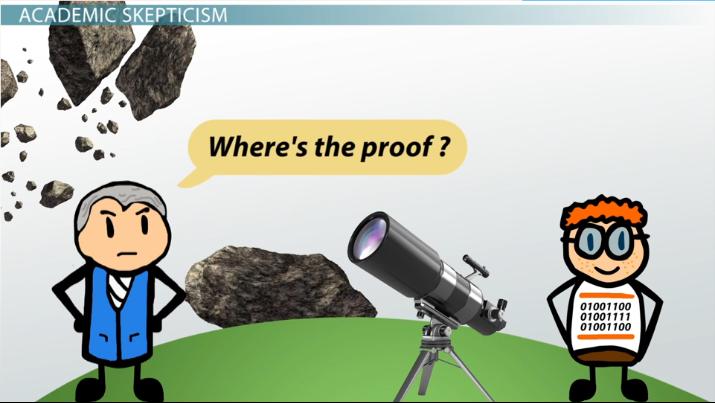
From https://study.com/academy/lesson/skepticism-definition-types.html

I don’t know how my smartphone works. But I am not bothered by the limits of my knowledge since there is at least one engineer or a small group of engineers who know the inner workings of this miracle machine. If the phone breaks, I know I can find someone to repair it. And as long as I am able to use it to perform useful functions, I feel content.

What, then, is my “unease with science”? I would say it’s more about the attribution of knowledge in a larger sense. I am concerned that individually and socially, we are rapidly outgrowing the ability to comprehend all that we know.  The invention of books and computers has allowed us to maintain the façade that knowledge is captured in a way that is accessible and understandable.  My discomfort is that soon, if we haven’t already, we will be unable to fully comprehend that accumulated knowledge.  Answers continue to get more and more complex, and knowledge so widely distributed that for the most part, we will be at a point where no one, not a person, groups of individuals or even computer systems will know how things work. If something breaks, no one will be able to fix it. This is the limit and consequence that is making me anxious.

As a newly minted neuroscientist in the 1990s, I embodied the optimism of youth that through science we would find answers to all problems. In my particular case, I was certain neuroscience would learn everything about how the brain worked in the 20-30 years following my Ph.D. It was simply a matter of time and increased knowledge. This exciting and limitless vista stretched before me as I settled down into building a career, a lab, and a reputation.

Thirty-plus years later, I remain optimistic about the power of science to answer a multitude of questions. But the vast panorama of unanswered questions remains limitless. While we seem to have learned a lot, the most interesting questions remain unresolved. I feel my frustration wrapped in a thinning veil of optimism. In turn, I have become sensitive to the limits of what once was science’s limitless potential. And what are those limits from my neuroscience perspective? The primary and most notable problem I see is a lack of holistic comprehension. Science has uncovered a multiplicity of independent bits of knowledge but no sense of how to fit it all together. I blame this on the lack of a language of integration, one related to the workings of the holistic mind. I have an intuition about what awareness, attention, and consciousness are, but have little understanding of their underlying neurobiology and how they relate to the rest of what I know. Most troubling, I have no or at least a very primitive language to talk about such processes.

Many will argue this kind of criticism of science reflects a defeatist attitude, i.e., giving up the fight while it is still too early to concede. Such obstacles, they will argue, are solvable by the old strategy of acquiring more knowledge and/or constructing the right vocabulary. Investigations can still produce revolutionary ideas about what questions to ask and how to ask them. This optimism arises from the fact that scientists have encountered limits before and have consistently overcome them. For instance, we learned to re-conceptualize the universe and matter. This occurred in classical physics and led to quantum mechanics. Likewise, we learned to analyze brain function using non-invasive methods like fMRI, allowing scientists to study the living, working brain. In this and many other examples, we breached and expanded boundaries. Yet, my pessimism persists since things are feel different now. But how?

My argument is not that new ideas, revolutionary concepts, and methods won’t allow us to penetrate boundaries. This is different from what John Horgan argues in his book The End of Science. Rather, the limit I am concerned about is that the understanding we need is already beyond our capability to absorb it conceptually. The limits of science are limits in our own processing capacity. The accumulation of scientific knowledge during the last one hundred years already crossed that boundary long ago. Yet, we have persisted because of the power of distributed knowledge, computational capacity, and especially the illusion that “if others know, then I know.”

The latest savior to delay the inevitable crash into this limitation of science is artificial intelligence or AI. But inevitably, AI will change from a tool we use for our benefit and that we control, to a system that will be impenetrable to human understanding and beyond our control. Perhaps we have already crossed aspects of this AI threshold – such as the one where at some point in a health crisis, I may become more dependent on artificial life than on other humans. It’s not yet true in most aspects of life, but comes pretty close in others, such as in the automation of tasks across a broad range of industries. I feel an unease about crossing this threshold. It is the same uneasiness about reaching the limits of science knowledge.

At its core, my unease with science is really my unease with not-knowing, the sense that answers lie beyond my comprehension. Trusting what we don’t understand, and trusting a “science” that is beyond us, is difficult for most of us. We see examples of this in the hesitancy to m-RNA based vaccines in this time of the coronavirus pandemic. Interestingly, it may be the most intelligent – those especially trained to be skeptical and to question everything – who experience this unease the most. For it raises issues of control, agency, and faith in technology. All these are crucial issues for our society to discuss before making the ultimate commitment to paths where there is no possibility of return. Individually, and later socially, we can become comfortable with not-knowing, lose the uneasiness with science, and simply enjoy the process of trying to find the answer!

As John Horgan points outs in his book: “No matter how much they learn, biologists will never really know how matter first became animate, just as cosmologists will never know how the universe began. Moreover, we will never find a final, definitive answer to the question of who we really are. Science-lovers should be grateful for the persistence of these mysteries. As long as they endure, so will our quest for self-knowledge.”

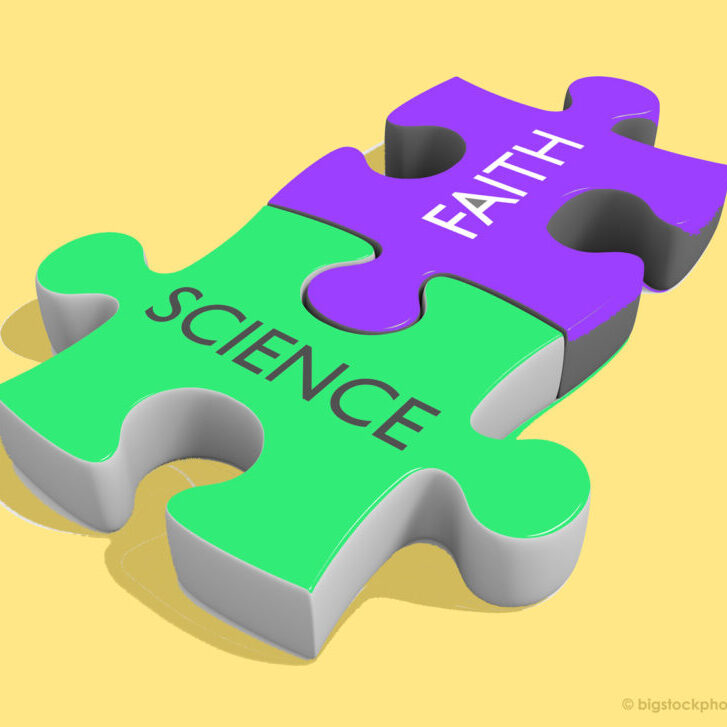
Science and Faith: From Skepticism to Wonder


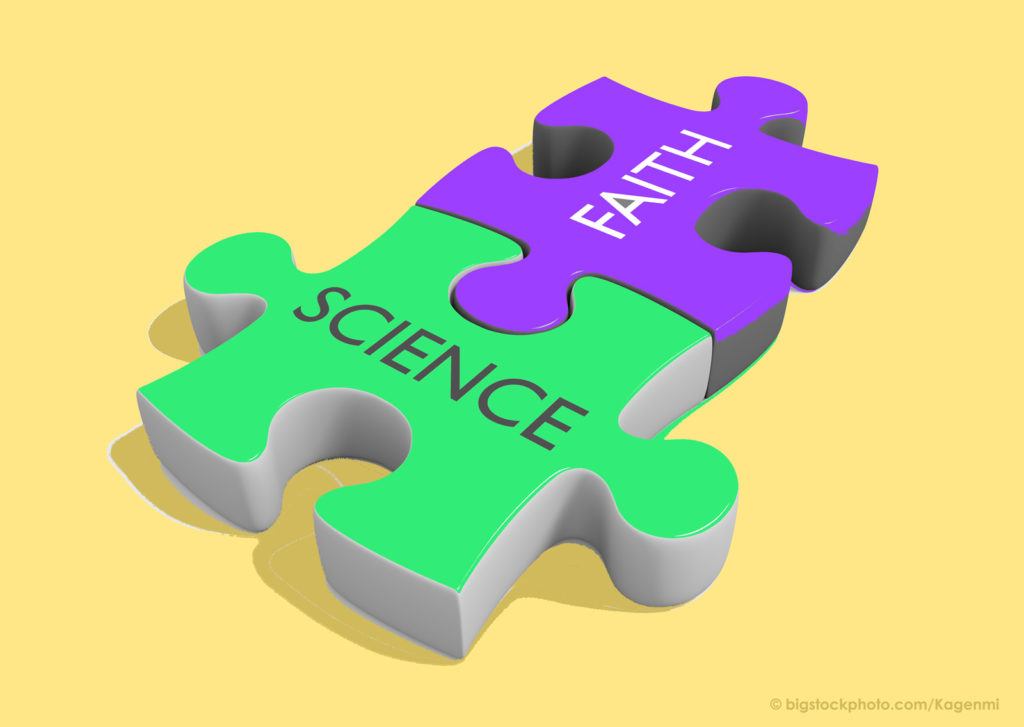
Image from Clayton, J.N. (2017). Science and Theology, May 19, By DGE?

For many of us, faith implies the belief in a Deity and powers that emanate from such a being. We conceive of such beliefs as beyond the reach of the intellect, and see science and faith, like oil and water, as not mixing very well. This creates a mindset in which we judge scientists as incapable or unwilling to express faith, and those who express faith as unable to understand the scientific viewpoint. Valid or not, many reasons have led to this unusual, unhelpful, and twisted logic. In an attempt to bring these two polar opposite views into synchrony, I describe a perspective on the path from skepticism to wonder and back that may provide a small beginning.

What is “truth?” How we arrive at that answer creates a multitude of feelings, thoughts, and approaches. Most of us, at the dawn of the 21st century, reflect the thinking which conceives of truth based on faith in opposition to that based on science. Science is a unique method requiring proof to an almost legalistic level, i.e., overwhelming circumstantial evidence that is beyond a reasonable doubt. We arrive at this type of truth by gathering data from what we experience. We then generate a best-guess explaining the accumulated evidence, test this hypothesis, and recalibrate the explanation based on the feedback. This is a painstaking, time-consuming, third-person, communal perspective. History has validated the worthiness of this approach, such as when evaluating pre-scientific explanations of diseases. For millennia, we considered disorders the work of unseen forces, evil spirits, or the devil. Applying the scientific method, scientists discovered that biological phenomena, including bacteria and viruses, and psychological events such as stress, were better explanations for these dynamics.

In contrast to science, faith is the willingness to accept things unexperienced. It rests on an individualized, first-person feeling based on trust and conviction, and less on evidence or proof. It is an extrasensory set of feelings and ideas in an individual, regardless of how others may react. I cannot, for example, convince others with data or reasoning that I experience God every day because, right or wrong, this is a private, individualized, and exclusive experience. It becomes more communal only when others experience similar things.

The paradox inherent in this science-faith discussion arises from theology and philosophy, namely the idea of the transcendence and immanence of God. This dichotomy reflects a pair of truths which appear to contradict each other. Imagine a continuum. At one end is the notion that God is separable from His creation. Or to put a theological spin on it, “God is transcendent and not imminent.” He created things, but those things do not define Him. He is beyond them. However, to believe in God’s transcendence and to neglect His immanence is to fall into the belief of a Supreme being and creator who does not intervene in the universe. At the other end of this continuum is the notion that nature expresses the Divine. God is nature. Or, to put it another way, “He is imminent (in nature).” But to believe in His immanence and to neglect His transcendence is to fall into the belief that reality is identical to divinity. Interestingly, modern Christian theology falls somewhere along this continuum. It argues that God is both transcendent and imminent, although imminent in only a few circumstances, such as the incarnation of Christ, the Bible, expressed love and caring. But He is not imminent in nature, pain, or inappropriate behavior.

Scholars have argued that the influence of Greek philosophy had a vast impact on early Christian theology and on the transcendence-imminence of God. It saw the world of physical objects as an inferior reality. Because of this influence, any human experience of God, which is physical and inferior to the spirit, would only be a poor mirage of the true perfection of the godhead (Crotty, 1982). The result of such thinking was an emphasis on the transcendent over the immanent God. Several scholars tried to reject these Greek ideas. Aristotle, and later Dietrich Bonhoeffer, believed that God is “out there” with ordinary life. Bonhoeffer’s “God is everywhere” concept, however, morphed into “God is not here” for everything with God meant nothing is God. Logical reasoning, such as this, unfortunately, never seems to get anywhere.

During the Middle Ages, particularly the 12th and 13th century, the precursor of the scientific method was Scholasticism. Its distinguishing characteristics were inclusion of the teachings of Christian faith in pursuing truth. The goal of this approach was more about uncovering the wonder in nature by refining the questions posed, rather than expecting a conclusive answer. The result was an understanding that forces existed beyond the intellect but which harnessed a unique understanding. Such insightful thinking morphed into one that focused more on the answers than on the wonderment surrounding the answers. This gave birth to scientism and the prevalent method of science used today. While we have learned much from this modern approach, we have lost that most valuable part of life—an appreciation of the mystery and wonder that surrounds our “answers.”

Reconnecting wonder to God’s creation paradoxically resolves the science-faith conundrum. Science becomes the study of creation, wonder and all, and faith reflects communion with this wonder. This is the uneasy answer most organized religion and organized science ought to seek. Not a return to classic Scholasticism, but a new scholasticism suited to modern sensibilities and intellectual needs. It is an uneasy answer because history shows that we have and will continue to find scientific explanations for what was once the domain of the Divine. Yet, scientists grow skeptical that the scientific method can provide answers to all problems. And those mysteries that remain, e.g., death, love, and guilt, appear to be the most fundamental ones. Hence, we cannot continue to ignore the wonder of creation, or we will not gain true insight.

I have argued in a previous blog that science and faith-based knowledge are two distinct strategies to know the world. Our brains synchronize these two approaches. Rather than using them as opposing strategies, they are complementary, facilitating and enriching each another. True faith results from questioning. Faith stripped of skepticism is brittle and breaks easily. We must confront and wrestle with paradoxes—not just believe them unquestionably. It is the wrestling that produces insight, grace, and enlightenment. Along with wonder, we need to regain the willingness to face these contradictions and the false certainty they create.